
Species Spotlight: Enoki Mushrooms

Enoki mushrooms (Flammulina velutipes), also known as velvet foot or velvet shank, are a cold-weather, wood-decaying mushroom native to temperate regions of Europe, North America, and Asia. In New Zealand, the species is naturalised and can be found in the wild around much of the country. It typically grows in clusters and has a small, sticky, yellow to orange-brown cap and a distinctive dark, velvety stem, growing on dead or dying hardwood through winter, often fruiting through frost and light snow. They are prized for their delicate, slightly fruity yet savoury flavour and snappy texture, which is a delight in many dishes.
Enoki is an interesting mushroom in the sense that cultivated forms can look quite different to their wild counterparts. In the wild, the mushrooms are vividly coloured, and have relatively short stems and wide caps. In cultivation, they are often purposefully grown under high CO2, low light conditions, which causes the stems to elongate and the caps to stay small, resulting in the dense clusters of lighter coloured, needle-like enoki mushrooms commonly seen in supermarkets and asian grocers.
Further to that, another, closely related species called Snow Needle Mushrooms (Flammulina filiformis) are also popular in cultivation. These are pure white. They are not found in the wild in New Zealand.
Common and Scientific names: Golden Enoki, Wild Enoki, Velvet Foot, Velvet Shank (for Flammulina velutipes), also Snow Needle or Winter Needle (for cultivated Flammulina filiformis).
Bio-geographical status: True enoki (Flammulina velutipes) is widespread and naturally occurs in many temperate locations around the world. In New Zealand, evidence is inconclusive as to whether or not they are truly 'native', but they are well established and naturalised in the native bush and on exotic trees, and were possibly accidentally introduced during the early colonisation of the country, brought in by infected imported wood products. White enoki (Flammulina filiformis) is only found in cultivation and not in the wild in New Zealand.
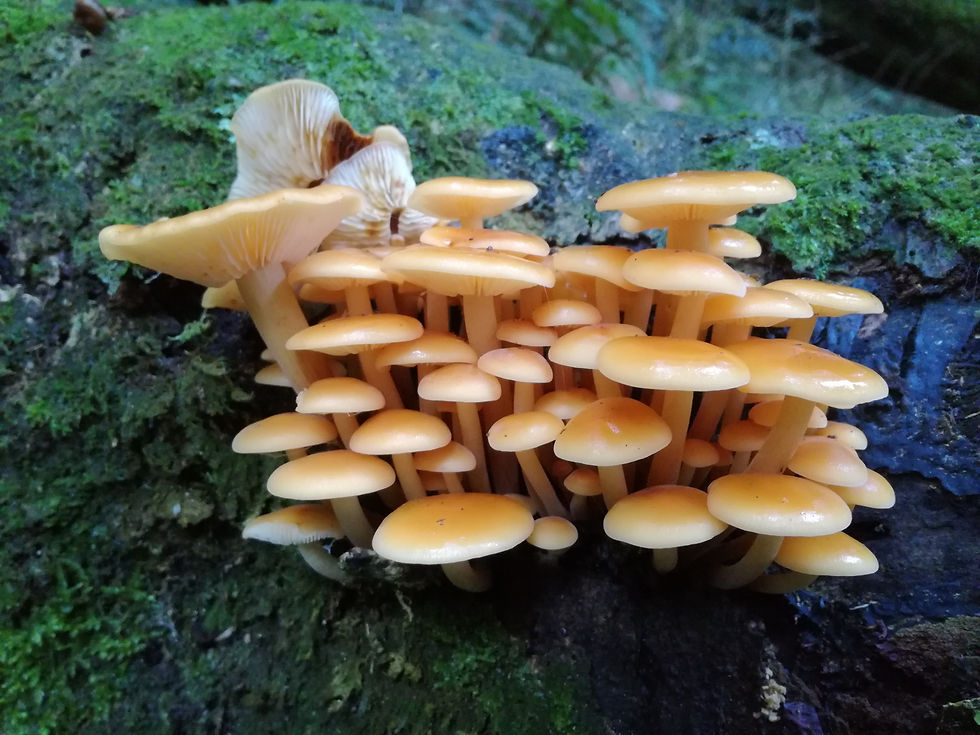
Habitat and Distribution: Enoki are a 'wood loving' mushroom and are found growing on logs, branches and trunks of both dead and living trees. They are commonly found in lowland or coastal broadleaf forests, as well as on native or exotic trees in urban parks and garden settings. Their preferred host trees include mahoe, pittosporum, lacebark, ribbonwood, whauwhaupaku (five finger), as well as exotic trees like poplar and willow. They can fruit at any height in a tree so when hunting for them, it pays to remember to look up as well as down! Enoki can be found throughout most of the country, although are less common in warmer areas like Northland.
Season: Enoki are a mushroom which loves cooler temperatures. In the wild, they're found mostly from autumn through to early spring, with their peak season around late autumn to mid winter (May to July).
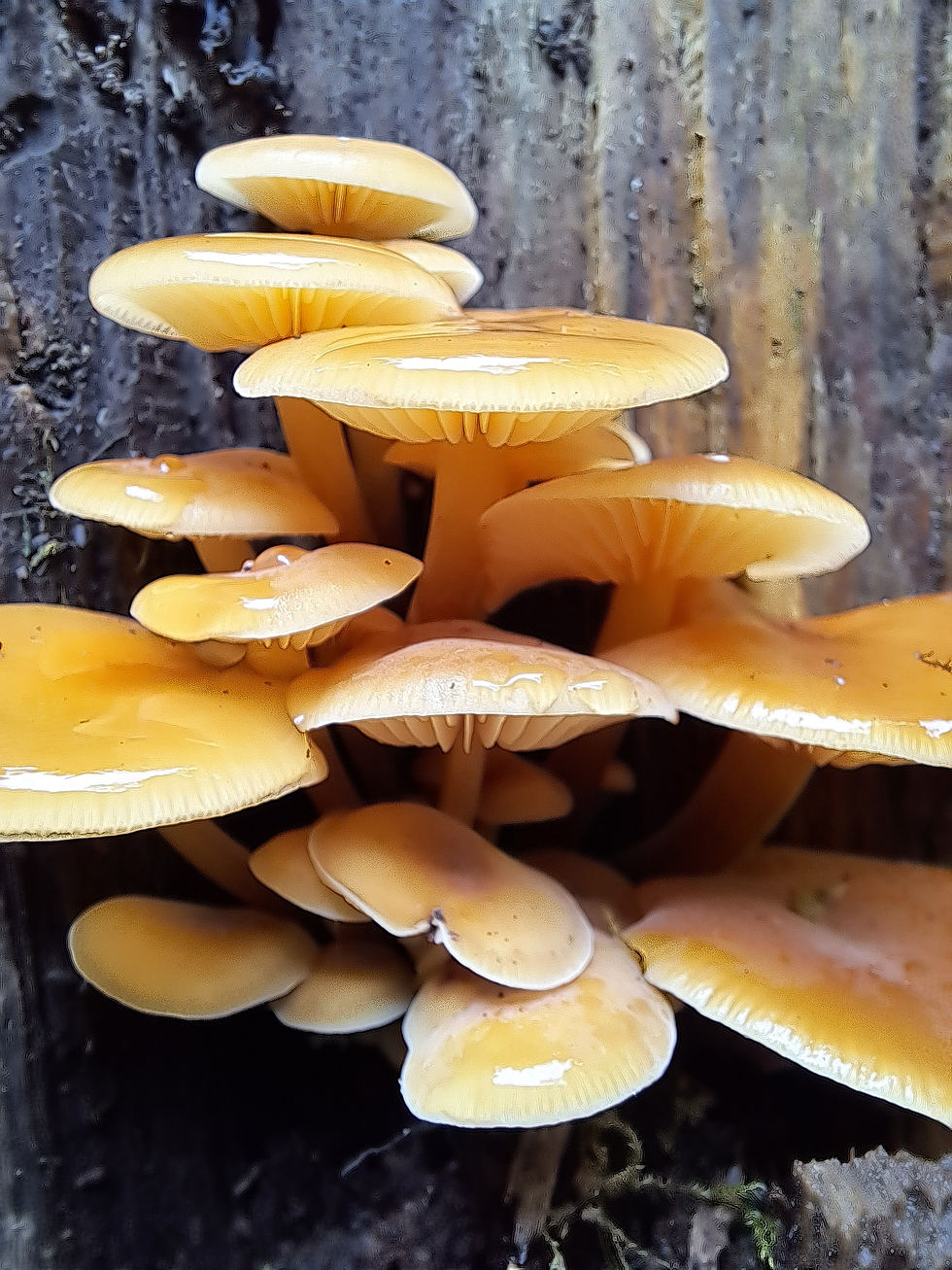
Identification Features: Enoki usually grow in attractive clusters of multiple brightly coloured fruitbodies emerging from the same base point. Occasionally they will grow singularly or in small clusters of two or three mushrooms.
The individual mushrooms, which are usually yellow to brownish orange in colour, feature a distinctive velveteen texture on their stipe (stem), which is often darker coloured at the base. The cap is dome shaped with a slightly sticky top surface. Caps can range from 1 to 8cm wide. Caps are rounded when young and flatten out as the mushrooms mature. The gills are white to pale yellow. Their aroma is mild, fresh, and fungal, sometimes with a slightly fruity hint.
Beware of lookalikes, the main ones being Galerina sp. which feature an annulus (ring) on the stem, rusty coloured gills and spores, and an often an umbo (nipple) on the centre of the cap. Galerina grow in similar habitats to enoki and are toxic - so always be sure to be 100% confident in your ID before eating enoki, or any other wild mushrooms!
Uses: Enoki are a culinary mushroom which are popular around the world, and particularly in asia, due to their fresh neutral flavour and snappy texture which goes wonderfully in dishes such as stir fries and noodle soups. They're widely cultivated at both the hobby and commercial scales and are a reasonably easy mushroom to grow. They are grown both indoors on sawdust based substrates and also outdoors on logs.
Nutrition: Enoki mushrooms have been valued as a nutritious food for centuries, particularly in Asia where they are widely perceived as a functional healing food. They are low in fat, high in protein and fibre, and are rich in vitamins and trace minerals. They contain a range of unique compounds which posses health boosting properties, including mycosterols and polysaccharides.
Clinical studies have suggested that incorporating enoki mushrooms into a balanced healthy diet may have antioxidant and free-radical scavenging affects, support a healthy immune system, support heart and gut health, and reduce inflammation.
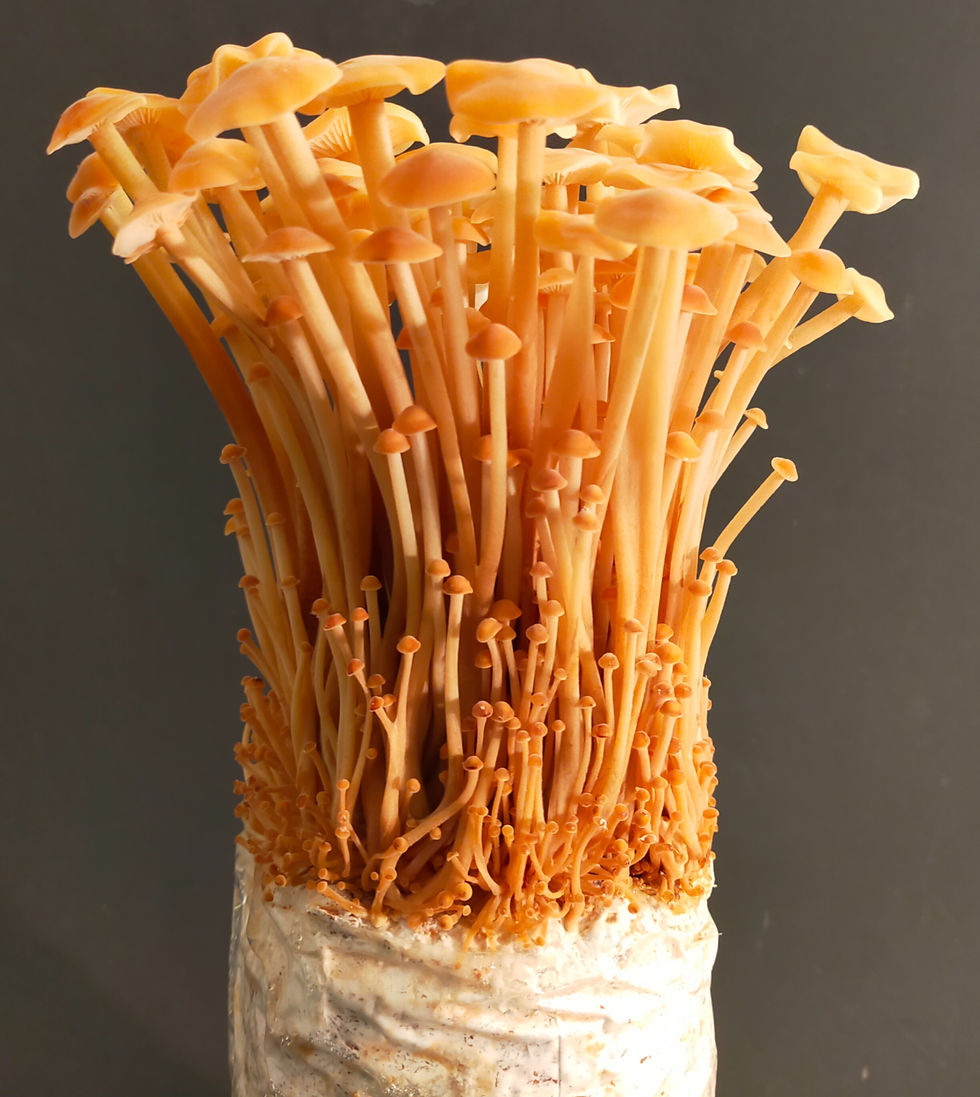
Cultivating Enoki Mushrooms: Enoki are most widely cultivated indoors on supplemented sawdust based substrates. In larger scale mushroom farms in Asia, they are often cultivated in 'bottle culture' - using jars or bottle shaped containers to hold the substrate, with the mushrooms growing as a cluster out of the top which is harvested and sold as a portion. They can also be grown in standard filter patch bags. Pre-made, ready-to-fruit enoki grow kits are available from MycoLogic from autumn through to spring.
While the goal for cultivating most other mushrooms is to give them plenty of fresh air exchange, to encourage robust fruitbody development, enoki growers will commonly restrict air exchange, letting CO2 accumulate in the growing space, which produces more spindly, elongated mushrooms with small caps, a trait seen as desirable in cultivated enoki. If they're grown with minimal amounts of light, the mushrooms will also be paler in colour.

Enoki can also be cultivated outdoors on logs inoculated with enoki culture dowels, which will fruit during the colder months of the year. Mushrooms grown this way will be vividly coloured, with shorter stems and wider caps, the same as enoki found in the wild.
Our grow guides have plenty of detailed information about all of these methods. If you prefer printed material, copies of 'Growing Gourmet Mushrooms at Home: An Introductory Guide' by MycoLogic founder Bart Acres are available right here on our website.
Cooking with Enoki Mushrooms: Enoki are a delicate mushroom both in flavour and texture. They have a mild, bright umami flavour and a slightly snappy or crunchy texture. They're usually cooked for a shorter amount of time than other more robust mushrooms, added in for the last minute or two of cooking. The base of the stems are often trimmed off as they can be overly fibrous. But most of the stem, and the caps, make for wonderful eating.
Enoki are most commonly utilised in Asian style cuisines. Their most famous usage is in hot soups like Japanese shabu-shabu, Chinese hot pots, and Korean stews, where they soak up the rich broth. They are also a wonderful addition to ramen or soba bowls, or stir fried with garlic, soy sauce and sesame seeds. Enoki pair well with all kinds of protein, whether meat or vegetarian options!


Comments